












































































































































10 Herbal Remedies for Diabetes: Evidence, Benefits, and Safety
Author: RVLNSV PRASAD
Updated: September 2026
About Us
Author Bio
Editorial Policy
Contact Us
Medical Disclaimer
This article is for educational purposes only. Herbal products and supplements are not substitutes for prescribed diabetes treatment. If you have diabetes, talk with your doctor or qualified healthcare professional before starting an herbal supplement, particularly if you take glucose-lowering medicines, insulin, or medicines for other conditions.
Quick Answer
Herbal remedies for diabetes have attracted considerable interest, but the evidence is much less certain than many online articles suggest.
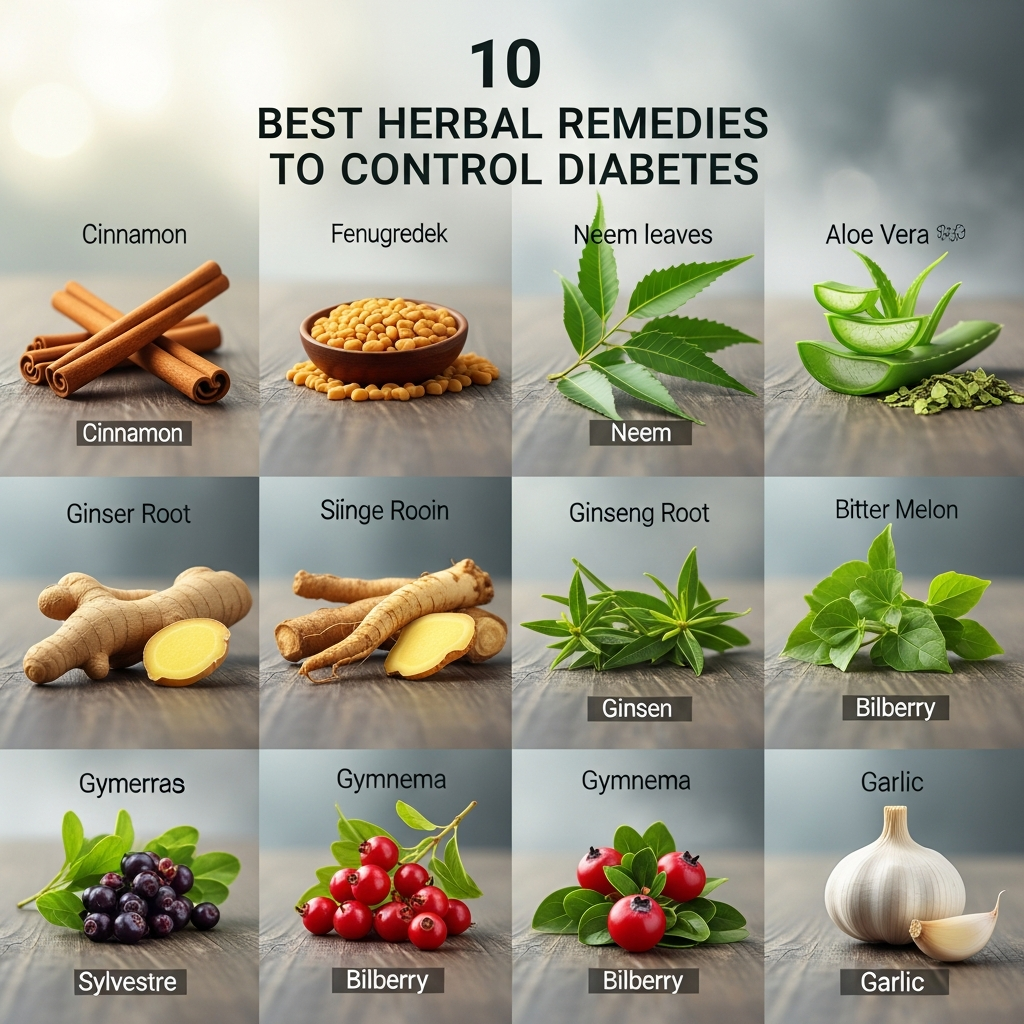
Researchers have studied herbs and plant-based products, including cinnamon, fenugreek, bitter melon, aloe vera, Gymnema, turmeric, ginger, garlic, holy basil, and neem. Some have produced promising findings in small or variable studies, but that does not mean they have been proven to treat diabetes.
The American Diabetes Association’s 2026 Standards of Care specifically state that herbs and spices such as cinnamon and aloe vera are not recommended for glycemic benefits. American Diabetes Association — Standards of Care in Diabetes 2026
The National Center for Complementary and Integrative Health (NCCIH) similarly reports that there is not reliable evidence that herbal supplements can control diabetes or its complications, while noting that research on individual products remains mixed and limited. NCCIH — Diabetes and Dietary Supplements
So the useful question is not
“Which herb cures diabetes?”
A better question is
“Which herbs have actually been studied, what did researchers find, how strong is the evidence, and what should I know about safety?”
Key Takeaways
- Several herbs have been studied in people with diabetes or prediabetes.
- Research interest does not equal proven treatment.
- Cinnamon and fenugreek have some human research behind them, but important uncertainties remain.
- Evidence for several other herbs is too limited to draw reliable conclusions.
- Herbal supplements can interact with diabetes medicines.
- “Natural” does not automatically mean safe.
- Some products sold online may make diabetes-treatment claims that have not been established.
- Herbs should not be used to replace prescribed medication, glucose monitoring, healthy eating, or physical activity.
- A food-level ingredient and a concentrated supplement are not necessarily equivalent.
Introduction: Why Are Herbal Remedies for Diabetes So Popular?
Diabetes management can feel complicated.
People may need to think about food, physical activity, sleep, medications, glucose monitoring, appointments, and long-term complications. It is understandable that some people look for simpler approaches, including traditional herbs and plant-based preparations.
There is also a long history of medicinal plants being used in different cultures.
But traditional use and clinical evidence are two different things.
An herb may have been used for generations without having undergone the large, well-designed clinical trials needed to establish whether a standardized supplement actually improves meaningful diabetes outcomes.
That distinction is often missing from online health articles.
NCCIH notes that many dietary supplements have been investigated for type 2 diabetes, but differences in study size, formulation, dosage, participants, and outcomes make the evidence difficult to interpret. NCCIH — Diabetes and Dietary Supplements: What You Need to Know
This is why this article does not rank herbs simply from “best” to “worst.”
Instead, each herb is considered through three questions:
Evidence → Safety → Context
Evidence: What have researchers actually found?
Safety: What could go wrong or interact with treatment?
Context: Where, if anywhere, could the herb fit into responsible diabetes care?
That framework is more useful than simply calling something a “powerful natural remedy.”
My Personal Perspective on Herbal Remedies
My interest in herbal remedies began through conversations within my family about traditional approaches to health.
Those experiences made me curious about a question that I think is important for anyone reading health information online:
Does traditional use automatically mean that something has been scientifically proven?
The more I looked into the subject, the clearer the distinction became.
An herb can be culturally important, commonly consumed, and scientifically interesting while still having insufficient evidence for treating a disease.
That changed how I think about articles on natural health.
Rather than asking readers to believe that a plant “works,” I think a better approach is to show what researchers know, what they do not know, and where caution is needed.
10 Herbal Remedies for Diabetes: What Has Been Studied?
The following table gives you a quick evidence-oriented overview.
| Herb or plant | What researchers have studied | Evidence assessment | Important consideration |
|---|---|---|---|
| Cinnamon | Blood glucose and metabolic markers | Mixed/limited | Results vary between studies and formulations. |
| Fenugreek | Glucose-related outcomes | Limited | May interact with diabetes medicines |
| Bitter melon | Blood glucose and diabetes-related outcomes | Insufficient | Human evidence remains limited. |
| Aloe vera | Glucose-related outcomes | Insufficient | Supplement forms can differ substantially. |
| Gymnema | Glucose and insulin-related outcomes | Limited | Safety and medication interactions matter. |
| Turmeric/curcumin | Metabolic and inflammatory markers | Insufficient for routine glycemic use | Supplements vary in formulation. |
| Ginger | Glucose and metabolic measures | Limited | More consistent clinical evidence is needed. |
| Garlic | Metabolic and cardiovascular measures | Limited for diabetes treatment | Supplements may interact with medicines. |
| Holy basil (Tulsi) | Glucose-related effects | Insufficient | Human evidence is not strong enough for treatment claims. |
| Neem | Traditional and experimental diabetes research | Insufficient | Should not be promoted as a diabetes treatment |
NCCIH’s broader review reaches an important conclusion: although several herbal supplements have been studied, research has generally been limited in size and quality and has not established herbal supplements as effective treatments for diabetes. NCCIH—Type 2 Diabetes and Dietary Supplements: What the Science Says
1. Cinnamon
Cinnamon is probably one of the most frequently discussed herbs when people search for herbal remedies for diabetes.
Researchers have investigated whether cinnamon supplementation influences fasting blood glucose, insulin resistance, lipids, and other metabolic measures.
The results are interesting but inconsistent.
NCCIH reports that a 2019 review involving 16 studies and 1,098 participants found reductions in fasting blood glucose and insulin resistance, but the studies differed considerably in dosage, formulation, participants, and other characteristics. The authors therefore called for more research using standardized preparations. NCCIH — Cinnamon and Type 2 Diabetes Evidence
That distinction matters.
What this means in practical terms
Adding cinnamon to food is very different from taking a concentrated cinnamon supplement every day.
Cassia cinnamon contains varying amounts of coumarin, which can be a concern for some people, particularly those with liver disease when large amounts are consumed. NCCIH — Diabetes and Dietary Supplements
Evidence verdict
Interesting research, but not established as a diabetes treatment.
The ADA’s 2026 guidance does not recommend cinnamon supplementation for glycemic benefits. ADA Standards of Care 2026
2. Fenugreek
Fenugreek seeds have a long history of traditional use and are especially familiar in South Asian cooking.
Researchers have investigated fenugreek for diabetes because its seeds contain fiber and other plant compounds that may influence glucose metabolism.
However, the quality of evidence remains an important limitation.
NCCIH states that there is not enough high-quality evidence to determine whether fenugreek is useful for diabetes. NCCIH — Fenugreek: Usefulness and Safety
Fenugreek can also cause digestive symptoms and may contribute to excessively low blood glucose when combined with glucose-lowering treatment.
A useful distinction
Using fenugreek as a culinary ingredient does not mean that a concentrated supplement is automatically appropriate.
That is a recurring theme throughout this article.
Evidence verdict
Promising traditional use, but insufficient high-quality evidence for diabetes treatment.
3. Bitter Melon
Bitter melon is widely used in Asian cuisines and traditional health practices.
It has attracted scientific interest because laboratory and early clinical research has examined possible effects on glucose metabolism.
However, laboratory findings should not be confused with proven benefits in people.
NCCIH lists bitter melon among the herbal products studied for diabetes but notes that research on these products remains limited in number, size and quality. NCCIH — Diabetes and Dietary Supplements
Evidence verdict
Worth studying scientifically, but current evidence is insufficient to present bitter melon as a proven treatment.
4. Aloe Vera
Aloe vera is another plant frequently marketed for blood sugar support.
Some research has investigated aloe preparations in people with diabetes, but the results do not provide a sufficiently reliable basis for recommending aloe supplements as routine glucose-lowering treatment.
The ADA’s 2026 Standards specifically include aloe vera among herbal supplements that are not recommended for glycemic benefits. American Diabetes Association — Standards of Care 2026
There is another practical issue: “aloe vera” does not describe one standardized product.
Different preparations can contain different components, concentrations, and processing methods.
Evidence verdict
Insufficient evidence for routine diabetes management.
5. Gymnema Sylvestre
Gymnema sylvestre has a particularly interesting history in traditional medicine and has been investigated for its potential effects on glucose metabolism.
The plant contains compounds that have attracted laboratory and clinical research interest.
However, the existence of biological activity does not establish that Gymnema can safely or reliably manage diabetes in everyday clinical practice.
For people already taking glucose-lowering medication, adding an herb with possible glucose effects should be discussed with a healthcare professional rather than treated as an independent experiment.
Evidence verdict
Research interest exists, but evidence is not strong enough to recommend it as a replacement for established diabetes care.
6. Turmeric and Curcumin
Turmeric is familiar as a culinary spice, while “curcumin” refers to a group of compounds found in turmeric.
This distinction is important because many supplement products contain concentrated curcumin extracts rather than ordinary culinary turmeric.
Researchers have examined curcumin for several metabolic and inflammatory outcomes.
But current diabetes guidance does not support routine herbal supplementation for improving glycemia.
The ADA’s 2026 Standards state that evidence remains insufficient to support routine use of herbal supplements such as curcumin for improving glycemia in people with diabetes. ADA Standards of Care 2026
Evidence verdict
Scientifically interesting, but not established as a routine glucose-lowering treatment.
7. Ginger
Ginger is another common food ingredient that has been investigated for metabolic effects.
Some studies have examined glucose-related measures and insulin sensitivity, but evidence from individual studies should not be interpreted as proof that ginger treats diabetes.
One reason evidence can appear stronger online than it really is is that websites sometimes combine laboratory studies, animal research and human clinical trials into one broad claim.
Those types of evidence are not interchangeable.
Evidence verdict
Limited human evidence; more high-quality research is needed before treatment claims can be made.
8. Garlic
Garlic is primarily a food, although concentrated garlic supplements are also widely available.
Researchers have studied garlic in relation to cardiovascular and metabolic health, including some diabetes-related outcomes.
For someone living with diabetes, however, cardiovascular health is only one part of the picture. A supplement that changes one laboratory marker does not automatically improve long-term diabetes outcomes.
The evidence for herbal supplements in diabetes remains insufficient overall, according to NCCIH. NCCIH — Diabetes and Dietary Supplements
Evidence verdict
Useful food ingredient, but garlic supplements should not be presented as proven diabetes treatment.
9. Holy Basil (Tulsi)
Holy basil, commonly known as Tulsi, has a long history of traditional use in South Asian health practices.
It is often promoted online for metabolic health and blood sugar management.
However, traditional popularity should not be mistaken for strong clinical evidence.
Human research specifically demonstrating that Tulsi can safely and reliably manage diabetes remains limited.
This is a good example of why an evidence-based article should distinguish between:
traditional use → scientific investigation → clinical proof
Those are three different stages.
Evidence verdict
Traditional relevance is substantial, but clinical evidence for diabetes treatment remains insufficient.
10. Neem
Neem is another plant deeply associated with traditional health practices.
Laboratory and experimental research has generated interest in neem’s biological properties, but that does not establish neem as a clinically proven treatment for diabetes.
For a person already managing glucose levels with medication, replacing established care with neem would be particularly inappropriate.
Evidence verdict
Insufficient clinical evidence for recommending neem as a diabetes treatment.
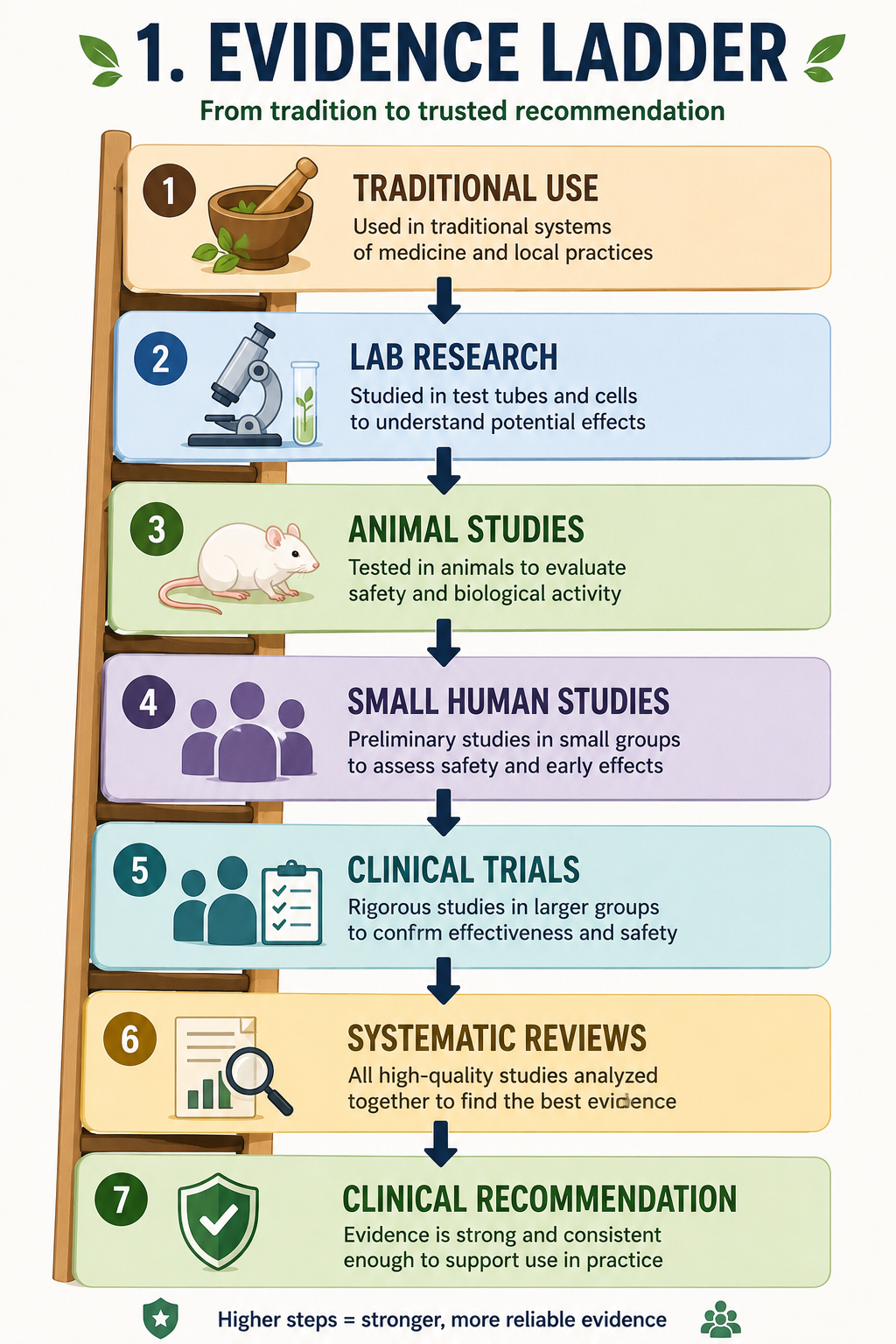
The Evidence Ladder: Why “Studied” Does Not Mean “Proven”
This is one of the most important concepts in the entire article.
A plant can move through several stages of scientific investigation:
Traditional use
↓
Laboratory research
↓
Animal studies
↓
Small human studies
↓
Randomized clinical trials
↓
Systematic reviews
↓
Clinical recommendations
The further down this ladder the evidence goes, the more confidently we can discuss whether something belongs in routine healthcare.
A laboratory study showing that a plant compound affects glucose metabolism is interesting.
It is not equivalent to demonstrating that people with diabetes who take that plant live longer, experience fewer complications, or consistently achieve better glucose control.
This is why the ADA and NCCIH remain cautious about herbal supplements despite decades of research interest. ADA Standards of Care 2026 NCCIH evidence review
Herbal Remedies vs. Diabetes Treatment: Do Not Confuse the Two
There is an important difference between supportive lifestyle choices and disease treatment.
For many people with diabetes, management may involve:
- an individualized eating pattern
- regular physical activity
- glucose monitoring
- weight management when appropriate
- prescribed medication
- insulin when needed
- regular medical follow-up
- management of cardiovascular risk factors
NIDDK explains that diabetes treatment can involve healthy food and beverages, physical activity, sleep and stress management alongside medicines when appropriate. NIDDK — Insulin, Medicines, and Other Diabetes Treatments
An herb should therefore be viewed, at most, as a separate question to discuss with a healthcare professional, not as a replacement for this foundation.
Why “Natural” Does Not Always Mean Safe
The word “natural” can create a false sense of security.
A concentrated plant extract can have biological effects. That is precisely why it can potentially interact with medicines.
NCCIH warns that some herbal supplements can cause side effects and that herbal products may interact with conventional diabetes medicines. NCCIH — Diabetes and Dietary Supplements
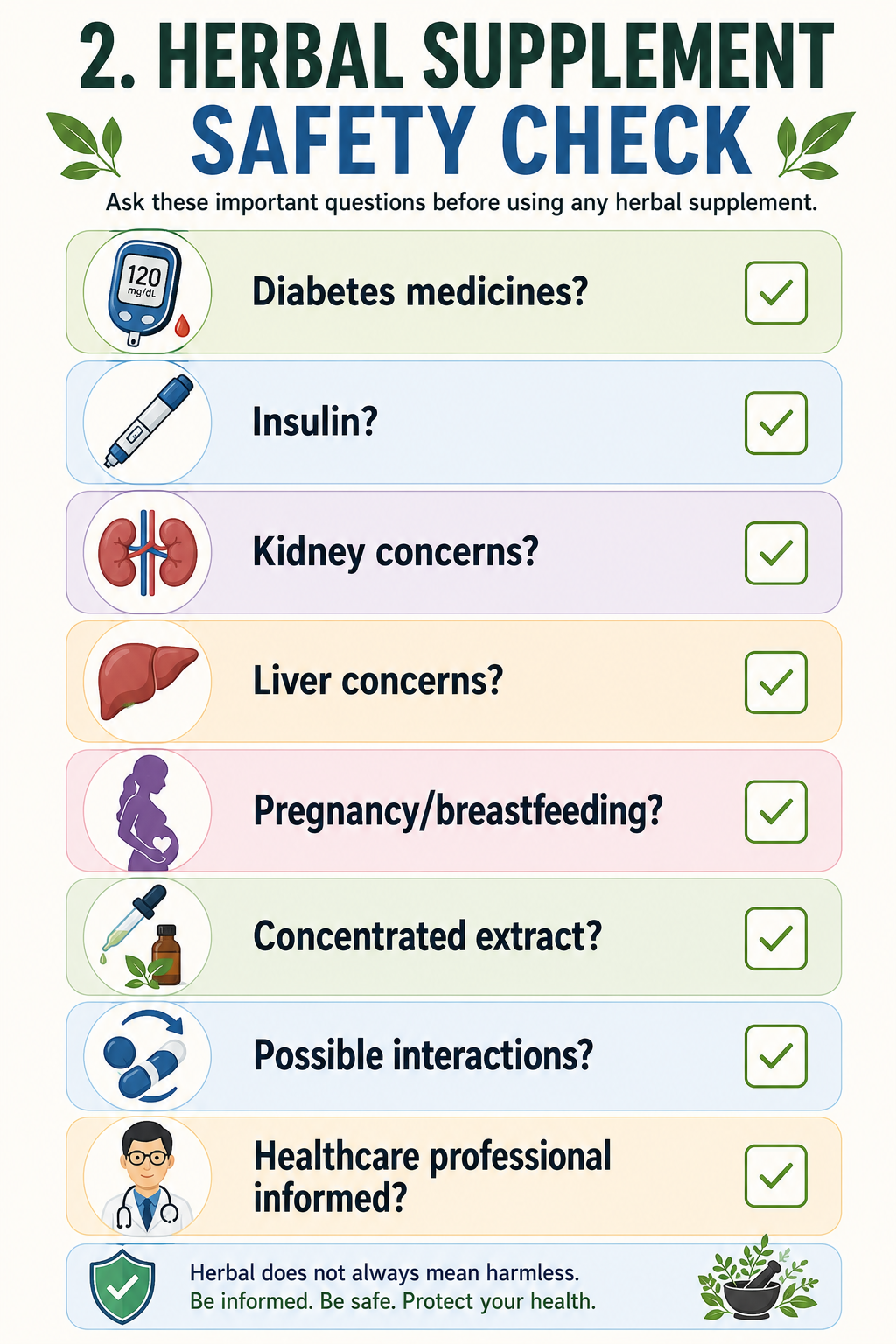
Before taking an herbal supplement, consider these questions:
| Question | Why it matters |
|---|---|
| Do I take diabetes medicine? | An additional glucose-lowering effect may not always be desirable. |
| Do I use insulin? | Glucose changes can require careful monitoring. |
| Do I have liver disease? | Some concentrated herbal products may pose additional concerns. |
| Do I have kidney disease? | Supplement safety may differ. |
| Am I pregnant or breastfeeding? | Safety data may be limited. |
| Is this a concentrated extract? | Food use and supplement doses are not necessarily equivalent. |
| Does the product make a “cure” claim? | That is a major reason to be cautious. |
| Does my doctor know I am taking it? | This helps prevent avoidable interactions |
Beware of “Natural Diabetes Cure” Claims
This is one area where readers should be especially skeptical.
A product advertised as
- “cures diabetes naturally”
- “replaces insulin”
- “reverses diabetes without medicine”
- “guaranteed blood sugar cure”
- “doctor-free diabetes treatment”
deserves careful scrutiny.
The U.S. FDA has warned about illegally marketed diabetes products and says consumers should be cautious about products claiming to treat diabetes without appropriate evidence or approval. Some products have also been found to contain undisclosed pharmaceutical ingredients. FDA—Illegally Sold Diabetes Treatments FDA—Questions and Answers on Illegal Diabetes Products
The phrase “all natural” is not evidence of effectiveness or safety.
Food Herb vs. Herbal Supplement: An Important Difference
This distinction deserves its own section because it is frequently overlooked.
Suppose you add a small amount of cinnamon to oatmeal.
That is a food choice.
Taking a concentrated cinnamon capsule designed to deliver a standardized extract is something different.
The same principle applies to turmeric, garlic, ginger, and other plants.
Think about it this way:
Food ingredient ≠ concentrated supplement ≠ medicine
Each has a different context, dose, and evidence base.
This is one reason it is misleading to say:
“People have eaten this herb for centuries, so concentrated supplements must be safe.”
Traditional culinary use cannot automatically establish the safety of a high-dose extract.
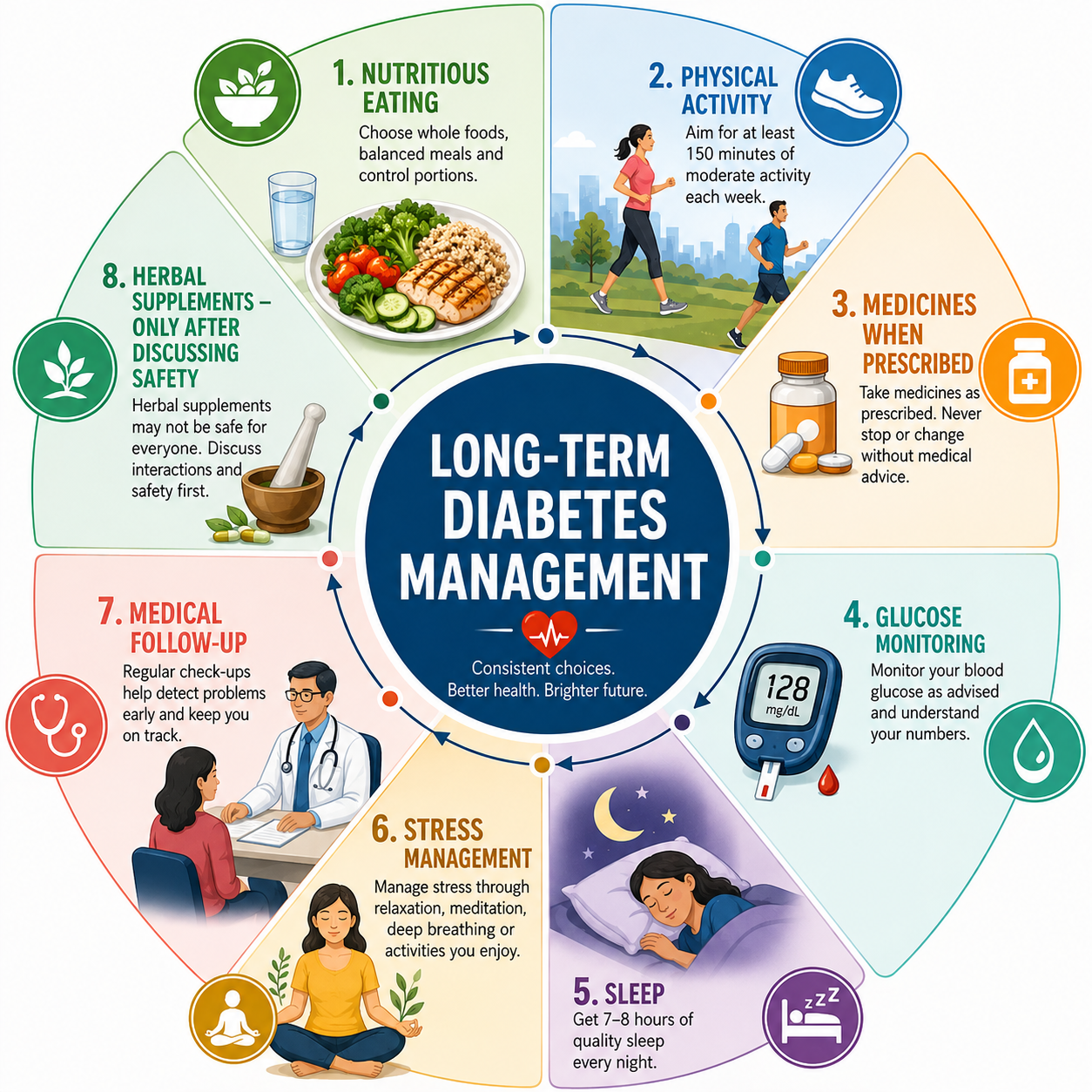
What Should Someone With Diabetes Do Instead?
If your goal is better long-term diabetes management, don’t allow the search for a single herb to distract you from the larger picture.
The ADA’s current guidance emphasizes nutritious eating patterns, physical activity, and other established health behaviors rather than relying on herbal supplements for glycemic benefits. ADA Standards of Care in Diabetes 2026
A more useful approach is
1. Build meals around nutritious foods.
Emphasize vegetables, whole foods, legumes, nuts, seeds, and other nutrient-dense choices appropriate for your individual needs.
2. Move regularly.
Physical activity can be an important part of diabetes management.
3. Take prescribed medicines as directed.
Do not discontinue or reduce medication because an herb appears to be helping.
4. Monitor your glucose as recommended.
Your own readings can provide useful information about how your overall treatment plan is working.
5. Discuss supplements openly.
Tell your doctor or pharmacist about herbs, powders, capsules, teas, and other supplements you use.
6. Judge claims by evidence
Ask:
“What human studies support this claim?”
That question is often more useful than asking whether something is “natural.”
A Better Way to Judge an Herbal Remedy
Before trying any product, use this simple 5-question evidence check.
Question 1: Was it studied in humans?
Animal or laboratory research is not enough.
Question 2: Were the studies well designed?
Randomized controlled trials and systematic reviews generally provide stronger evidence than testimonials.
Question 3: Were the results consistent?
One positive study does not outweigh a large body of conflicting research.
Question 4: Was the preparation standardized?
An herb’s species, extract, dose, and formulation can affect the results.
Question 5: Is there a safety concern?
Potential medication interactions matter even when evidence of benefit is promising.
This framework can protect readers from one of the biggest problems in natural-health information: confusing possibility with proof.
What I Would Not Do
If you are considering herbal remedies for diabetes, I would avoid these approaches:
| Avoid | Better approach |
|---|---|
| Replacing prescribed medicine with an herb | Discuss supplements with your healthcare professional. |
| Assuming “natural” means harmless | Check interactions and possible adverse effects. |
| Taking several supplements at once | Evaluate one product at a time with professional guidance. |
| Trusting testimonials as proof | Look for human clinical evidence. |
| Following an internet dosage blindly | Use professional guidance. |
| Buying products promising a cure | Look for transparent evidence and reputable manufacturing. |
| Stopping glucose monitoring | Continue monitoring according to your care plan. |
| Treating one positive study as definitive | Consider the total evidence |
The Most Important Lesson From Herbal Diabetes Research
The most interesting thing about this subject is not actually which herb comes first.
It is the gap between traditional belief, scientific possibility, and clinical proof.
That gap explains why two websites can describe the same herb very differently.
One may say:
“This herb lowers blood sugar.”
A more scientifically responsible description might be
“This herb has been studied for glucose-related outcomes, but available evidence is limited or inconsistent.”
The second statement may sound less exciting.
It is also much more useful to a person making a healthcare decision.
Frequently Asked Questions
Can herbal remedies cure diabetes?
No herbal remedy should be presented as a proven cure for diabetes. Current evidence does not establish herbal supplements as replacements for established diabetes treatment. NCCIH specifically reports that reliable evidence is lacking for herbal supplements controlling diabetes or its complications. NCCIH — Diabetes and Dietary Supplements
What is the best herb for diabetes?
There is no scientifically established “best herb” for treating diabetes. Cinnamon and several other herbs have been studied, but evidence varies and is not strong enough to rank one as a proven treatment. NCCIH — Type 2 Diabetes and Dietary Supplements
Can I take cinnamon if I have diabetes?
Cinnamon is commonly used as a food ingredient and has been studied in diabetes, but research results are mixed. The ADA does not recommend cinnamon supplementation for glycemic benefits. Talk with your healthcare professional before using concentrated supplements. ADA Standards of Care 2026
Is fenugreek proven to lower blood sugar?
Fenugreek has been studied, but NCCIH says there is not enough high-quality evidence to determine whether it is useful for diabetes. It can also have side effects and may interact with medicines. NCCIH — Fenugreek
Can herbs replace diabetes medicine?
No. People should not stop prescribed diabetes medication and substitute an herbal product without medical supervision. Established diabetes treatment may include medicines, insulin, lifestyle measures, and monitoring. NIDDK — Diabetes Medicines and Treatments
Are herbal supplements safe for everyone with diabetes?
No. Safety depends on the specific herb, preparation, amount, medical conditions, and medicines being used. Some herbal products can interact with conventional diabetes drugs. NCCIH — Diabetes and Dietary Supplements
Is turmeric good for diabetes?
Turmeric and curcumin have been investigated for several metabolic outcomes, but current evidence does not support routinely using herbal supplementation for glycemic benefits. ADA Standards of Care 2026
Should I tell my doctor about herbal supplements?
Yes. Tell your doctor, pharmacist, or other qualified healthcare professional about supplements you use, particularly if you take diabetes medicines or insulin. This can help identify possible interactions or safety concerns. NCCIH — Diabetes and Dietary Supplements
Conclusion
The popularity of herbal remedies for diabetes is understandable. Plants have played important roles in traditional health practices for centuries, and modern researchers continue to investigate their biological effects.
But responsible health information requires a distinction between traditional use, promising research, and proven treatment.
Cinnamon, fenugreek, bitter melon, aloe vera, Gymnema, turmeric, ginger, garlic, tulsi, and neem have all attracted interest in the diabetes research field. Yet the current evidence does not justify presenting these herbs as cures or substitutes for established diabetes care.
The ADA’s 2026 Standards do not recommend herbal supplements such as cinnamon or aloe vera for glycemic benefits, while NCCIH concludes that reliable evidence is lacking for herbal supplements as a means of controlling diabetes or its complications. American Diabetes Association — Standards of Care 2026 NCCIH — Diabetes and Dietary Supplements
The safest takeaway is therefore simple:
Don’t ask which herb is a miracle cure. Ask what has been studied, how strong the evidence is, what the risks are, and how the product fits into your overall diabetes care.
That approach respects both traditional knowledge and modern evidence.
Author Note
About the author: RVLNSV PRASAD writes health and wellness content with a focus on practical, evidence-informed information for everyday readers.
For transparency and reader trust, health claims in this article have been checked against authoritative sources, including the American Diabetes Association, the National Center for Complementary and Integrative Health, the National Institute of Diabetes and Digestive and Kidney Diseases, and the U.S. Food and Drug Administration.
You can also add your existing author and editorial-policy links here:
Medical Disclaimer
This article provides general educational information and does not diagnose, treat, or cure diabetes. Herbal products and dietary supplements can have side effects or interact with medicines. Anyone with diabetes should speak with a qualified healthcare professional before starting, stopping, or changing an herbal supplement or prescribed treatment.
Author Biography
Editorial Policy
Sources
Important: Herbal remedies may support healthy lifestyle habits, but they should not replace prescribed diabetes treatment. Current evidence suggests that some herbs and supplements have been studied for blood sugar management, but major medical organizations do not recommend relying on supplements alone to manage diabetes. Always discuss supplements with a qualified healthcare professional, especially if you take diabetes medications
- American Diabetes Association (ADA) – Nutrition and Supplements
- National Center for Complementary and Integrative Health (NCCIH) – Diabetes and Dietary Supplements
- NCCIH – Cinnamon Research Overview
- American Diabetes Association Standards of Care in Diabetes
- National Institute of Diabetes and Digestive and Kidney Diseases (NIDDK) – Diabetes Overview
More Articles From This Blog
- 7 Healing Herbs for Boosting Energy Naturally: A Comprehensive Guide
- Natural Remedies for Boosting Immunity with Plants: A Comprehensive Guide
- 10 Best Herbal Teas for Calming the Mind:A Comprehensive Guide Natural Stress Relief
- 7 Natural Ways to Reduce Anxiety and Stress Daily: A Comprehensive Guide
- Home
- Category Healthy Habits









[…] 10 Best Herbal Remedies to Control Diabetes […]
[…] 10 Best Herbal Remedies to Control Diabetes […]
[…] 10 Best Herbal Remedies to Control Diabetes […]
[…] 10 Best Herbal Remedies to Control Diabetes […]
[…] 10 Best Herbal Remedies to Control Diabetes […]
[…] 10 Best Herbal Remedies to Control Diabetes […]
[…] 10 Best Herbal Remedies to Control Diabetes […]
[…] 10 Best Herbal Remedies to Control Diabetes […]